BMW also
released a project update to the Landfill Gas-to-Hydrogen Pilot Project.
The first phase of the study, that validated the economic and technical
feasibility, began in July 2011. The project has now successfully moved
to the second phase of methane-to-hydrogen conversion. The project team,
led by South Carolina Research Authority (SCRA), is implementing and
testing equipment that will monitor the hydrogen purity. To do this, BMW
has installed a clean-up system that takes a stream of landfill gas
(post-siloxane removal), removes the sulfur and trace contaminants and,
ultimately, produces hydrogen via a Steam Methane Reformer (SMR).
“BMW is
very pleased with the progress we have been able to achieve in the last
18 months, said Cleve Beaufort, BMW Group’s Energy Manager for the U.S.
and Canada. “The objective of generating renewable hydrogen from methane
is proving to be a possible option for BMW and will be transformational
for the fuel cell industry.”
Throughout
this project, SCRA has been a leading funding and implementation
partner. The U.S. Department of Energy has also provided both technical
and funding support for the project.
The final
phase of this project is scheduled to begin in late 2013. At that time,
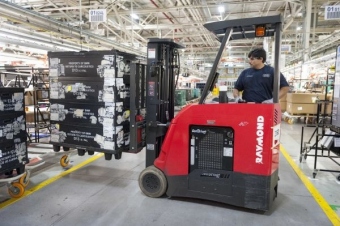
BMW will conduct side-by-side trials of material handling equipment
fueled by landfill gas derived hydrogen versus commercially sourced
hydrogen.
For their
efforts in on-site energy production, the U.S. Environmental Protection
Agency recently named BMW Manufacturing the second largest Green Power
Partner. Green Power rankings recognize U.S. businesses and communities
that are making investments in on-site power generation. BMW’s U.S.
plant currently produces 38% of its electrical requirements on-site,
mostly from its landfill gas-to-energy program.
Photos:
BMW
(March 13, 2013)


